Let’s Un-PPACA Some Recent Obamacare News

Administrators, please do us a favor.  Forward this to your school business officials right now.  We have two reasons for making this request  

First, we’ve set a date for our 2022 PPACA Reporting Workshop.  It’ll take place December 14, 2022, from 9 AM to noon central time, and it will be recorded and accessible afterwards if you (and/or your business officials) can’t make it live.  You can register here.  This webinar will be useful for all school business officials who have PPACA reporting obligations.

Second, we’re hoping to save you a lot of angst and confusion about some recent regulations released by the IRS regarding “affordability” calculations of insurance offers under PPACA/Obamacare and their impact on compliance.  We’ve received several questions on what, exactly, this means.  We’re hoping this post helps clarify things.

What regulations?  On October 11, 2022, the IRS released these regulations.  The same day, President Biden released this statement.  In summary, the regulations are designed to “fix” what has been called the “family glitch” under PPACA.  It’s called a “glitch” because, ironically, the better the offer of coverage from employer to employee, the fewer options the employee’s family may have to find reasonably priced insurance elsewhere.  We’ll discuss this below.  From the headlines, it is hard to understand what happened and what impact it may have on school district and service agency compliance.

The Good NewsYou do not need to change your insurance offers because of these regulations.  Nor are you going to be subjected to additional tax penalties because of these regulations

Whether you’re a seasoned veteran or novice to the PPACA employer compliance game, you know one of the key questions we answer during reporting every year is whether your insurance offers to your “full time” employees are “affordable,” and whether your offer allowed your employees to “enroll” their families in your plan.  If a full-time employee receives an offer that is not “affordable” and that employee obtains insurance and premium tax credits through the healthcare.gov marketplace, the employer may be subject to a “pay or play” tax penalty.  However, the “affordability” calculation (and whether you may owe a penalty) is based on the cost of employee-only coverage compared to the employee’s household income, and not what it would cost to insure their entire family.  As a reminder, only applicable large employers (ALEs) are subject to this requirement.  You are an applicable large employer if you averaged at least 50 full-time employees, including full-time equivalent employees, during the prior calendar year. 

Thankfully, these new regulations did not change this analysis.  All of the employer compliance computations and all of that reporting will still be based on the cost of employee-only coverage.  In other words, the rules as we’ve all come to know them from the ALE compliance perspective did not change.

As the IRS put it: these regulations do not change when an employer could be subject to tax penalties, nor do they affect “any information reporting requirements for employers,” including Form 1095-C.  If you’re satisfied by knowing your insurance offer, 1095-C reporting, and possible tax penalty obligations were not really affected, no need to read on.  If you want more info on what did happen, read on, my friend.

Okay, so what really happened?  The reason it’s called the “family glitch” is pretty straightforward.  Let’s assume Employee A is a full-time paraprofessional that works for School District X, and School District X offers to pay Employee A’s full single premium and allows Employee A to pay out of pocket to enroll his spouse and kids.  Whether or not Employee A accepts the offer and enrolls, or declines the offer to seek insurance elsewhere, School District X will not owe a tax penalty on Employee A because the cost to Employee A for single-only coverage is $0.  In other words, School District X has satisfied its obligation to “offer” affordable insurance to its full-time employee and allow him to enroll the rest of his family through the school’s plan.  This is true even if Employee A’s family has to pay $17,000 more out of pocket to enroll their full family, because compliance is based on the single-only offer to the employee.

Sounds like you’ve done it correctly, right?  From the school’s compliance perspective, you have!  However, that offer could have a meaningful impact on the insurance options available to Employee A’s family.  It’s awesome that Employee A can receive single coverage at little or no cost, but what about Employee A’s spouse and kids?  What if Employee A’s spouse is self-employed, they have 3 children, and they can’t afford to pay the $17,000 difference between employee-only and full family coverage?  

Under the rules prior to these new regulations, because Employee A received an affordable offer from the employer, Employee A’s family was not eligible for premium tax credits or assistance if they tried to enroll through the healthcare.gov insurance marketplace.  Thus, the “family glitch.”  The Biden Administration (and most who commented on the proposed regulations) did not like that outcome.  Employee A’s family really needed the benefit of premium assistance through the marketplace, but they weren’t eligible for that assistance because Employee A received an “affordable” offer from School District X.  Marketplace eligibility was based on the cost of employee-only coverage, not the full cost to enroll the entire family.

These newest regulations changed that in an effort to “fix the glitch.”  Starting with the next healthcare.gov open enrollment period (which began Nov. 1, 2022), Employee A’s family now may be eligible for premium tax credits.  The new rules will compare the cost of enrolling Employee A’s full family on School District X’s plan against their household income.  If the percentage difference is low enough, then Employee A’s family may be eligible for premium assistance through healthcare.gov even if Employee A’s offer was “affordable.”  

Bottom line, the good ol’ “affordability” test for employer offers/reporting remains the same, but there’s a new “affordability” test for eligibility for premium assistance on healthcare.gov.  As an employer, you will still only owe a tax penalty if you fail to offer a full-time employee “affordable” single-only insurance coverage and that employee obtains coverage and premium assistance on the healthcare.gov marketplace.

What does it all mean?!  For our clients, not much from a purely legal compliance perspective.  However, practically speaking you may see more employees and their families seek out marketplace insurance.  They may do that by having the school’s employee take the district’s coverage and then insuring the employee’s family through the marketplace.  Or, maybe the entire family will head to the marketplace.  Will it lead to more negotiations over cash-in-lieu options; or more employees turning to healthcare.gov?  We’ll see.

If you have any questions about these new regulations or your PPACA compliance, please contact your attorney or drop us a line at ksb@ksbschoollaw.com.

S-O-S, Please, Someone Help Me

In honor of Rihanna being named this year’s Superbowl Halftime Performer (or more likely in response to a notable increase in emergency exclusions of students generally, and students with disabilities specifically), the Nebraska Department of Education issued and updated new “SOS” guidance on disciplinary removals of special education students.  This guidance confirmed that the NDE (consistent with the U.S. Department of Education) generally considers an emergency exclusion to be a “disciplinary” removal that requires a manifestation determination after 10 school days of removal (or a pattern of removals that aggregate past 10 school days) if it constitutes a change in placement.  Although we’ve long understood this to be the Department’s position, the updated guidance provides additional clarity to schools struggling to address threatening or disruptive conduct of a student with a disability. 

SOS Guidance TL;DR

The state and federal regulations implementing the IDEA require that a student be provided procedural safeguards (which begin with a manifestation determination) after a disciplinary removal of more than ten school days resulting in a change in placement.  For years, we’ve taken the position that an emergency exclusion is not a disciplinary action, and therefore could not trigger the procedural safeguards specific to disciplinary removals.  We expected, though, that the NDE would disagree with that position if given the opportunity.  This expectation was informally confirmed by Department officials in the past and was formally confirmed in the October 2022 SOS guidance.

The Department relied in large part on the recent Q&A Guidance from OSEP released in July 2022 (which we blogged about here.)  That guidance provided that the requirements related to disciplinary removals would apply even to “informal removals,” or in other words, “[an] action taken by school personnel in response to a child’s behavior that excludes the child for part or all of the school day, or even an indefinite period of time.”  As a result, the Department opined that “when districts [emergency] exclude a student under Neb. Rev. Stat. § 79-264(b) districts must follow special education discipline requirements” articulated by Rule 51.

So Do We Now Hold A Manifestation For Every Emergency Exclusion?

No.  Rule 51 only requires districts to make a manifestation determination when a student has been removed for more than 10 consecutive school days, or for a pattern of removals accumulating to more than 10 school days, and as a result has experienced a change in placement.

In other words, if a student’s emergency exclusion does not exceed the 10 school day threshold, the district is not required to provide services during the period of removal, hold an IEP Team meeting, or make a manifestation determination. 

Similarly, if the student’s emergency exclusion exceeds 10 school days, and the district provides special education services on the 11th day of removal sufficient to enable the child to participate in the general education curriculum (although in another setting) and progress towards meeting the goals in the IEP, the district is not required to hold a manifestation determination.  

On the other hand, if the student’s emergency exclusion exceeds 10 school days and constitutes a change in placement, a manifestation determination is required, and the District must follow the subsequent procedural requirements depending upon the determination made.

Conclusion

The new SOS guidance provides helpful clarity regarding the Department’s expectations and intended enforcement of Rule 51.  However, in most schools and under most circumstances, the new guidance won’t have a major impact on how administrators are keeping their schools safe.  When a student’s disability-related misconduct can be safely addressed through a change in educational placement and services, a disciplinary removal simply is not the most effective course of action.  In our experience, most schools are using the LRE continuum to address student issues when it can be done safely, are already working to serve and educate special education students during periods of emergency exclusion, and are only using emergency exclusion procedures to assess and address threats and risks.  Additionally, we always recommend schools work with their attorney when a student must be emergency excluded, especially if the student is a student with a disability.  

If you have an emergency you need help responding to, or any other legal questions or issues, please do not hesitate to call Karen, Steve, Bobby, Coady, Jordan, Tyler, or Sara or send us an email at ksb@ksbschoollaw.com. In the meantime, you can bring your questions about this guidance to, or just heckle Karen at, her presentations at the Tri-State Regional Special Education Law Conference in Omaha on Thursday and Friday.

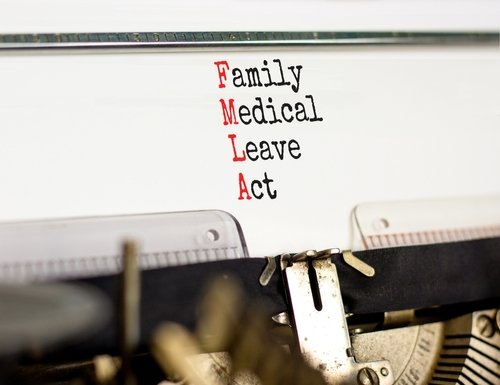
Taking the “FML” out of the FMLA

Stuff happens.  In our office, there are countless ways life might come before work.  Ashley might act as if FMLA stands for “Friday and Monday Leave Act” and claim migraines necessitating intermittent leave.  Is intermittent leave appropriate for her migraines?  What if Bobby requests FMLA leave to deal with his stress caused by Jordan’s incessant bullying?  How does the FMLA interact with mental health diagnoses?  What if the law clerks Amanda and Jessa both generously find out they are eligible bone marrow donors and request to utilize FMLA leave for the retrieval process? (We are really stretching our brains over here creating clever hypotheticals!).

Part 4: It’s Closing Time, Open all the Doors, and Let You Out Into the (FMLA-riddled) World

What better way to end our FMLA series than with a reference to the classic 1990s hit by Semisonic?  We are certain you are happy it is “closing time” for this series.  As a refresher, Part-1 discussed FMLA basics and the type of family and health events that trigger FMLA eligibility.  Part-2 focused on employer notice obligations and special FMLA rules for instructional employees at schools.  Part-3 focused on the mechanics of FMLA leave.  Today’s latest installment addresses special school rules for instructional employees and lays out some common scenarios a school might encounter.  

Special School Rules for Instructional Employees

The FMLA includes a few unique rules for school instructional employees.

What if an instructional employee needs intermittent leave or leave on a reduced leave schedule for the employee’s own serious health condition, to care for a family member with a serious health condition, or to care for a covered servicemember?

The school may require the employee to choose either to: 

  • Take leave for a period or periods of a particular duration, not greater than the duration of the planned treatment; or

  • Transfer temporarily to an available alternative position for which the employee is qualified, which has equivalent pay and benefits and which better accommodates recurring periods of leave. 

This section only applies if the leave is foreseeable based on planned medical treatment for a serious health condition and the employee would be on leave for more than 20 percent of the total number of working days over the period the leave would extend. 

What if an instructional employee does not give required notice of foreseeable FMLA leave to be taken intermittently or on a reduced leave schedule?

The school district may require the employee to: take leave of a particular duration; transfer temporarily to an alternative position; or require the teacher to delay the taking of leave until the notice provision is met. 

What if the leave begins more than 5 weeks before the end of a term?

The school district may require the teacher to take leave until the end of the term if leave lasts at least 3 weeks and the teacher will return during the 3-week period before the end of the term. 

What if the leave begins less than 5 weeks before the end of a term?

The school district may require the teacher to take leave until the end of the term if leave lasts at least 2 weeks, and the teacher will return during the 2-week period before the end of the term.

  • Note: This section does not apply if the leave is for the employee’s own serious health condition.  

What if the leave begins less than 3 weeks before the end of a term?

The school district may require the teacher to take leave until the end of the term if leave lasts more than 5 working days.

  • Note: This section does not apply if the leave is for the employee’s own serious health condition.  

Pulling it All Together   

Scenario 1

Michael, who began employment in August, comes to you in February with news that his brother, a covered service member, was injured while deployed overseas.  You ask what happened and learn that Michael’s brother broke his back and will be immobile for a time.  Referring to the general notice posted in his employee handbook and on the school’s employee web portal, Michael requests 4 weeks of FMLA leave to care for him.  While this is a serious health condition, you unfortunately must inform Michael that he is not a covered employee.  Why?  He has not worked there for at least 12 months or accumulated 1,250 hours during the 12 hours prior to the start of leave.  What next?  Issue an eligibility notice to Michael informing him that he is ineligible and include both reasons. 

Scenario 2

Jim and Pam have exciting news.  They are having a baby.  They both work for the school district.  Because the district does not offer maternity/paternity leave, they are trying to figure out how to stretch their paid time off to care for the baby.  Realizing that birth or adoption triggers the right to FMLA leave, you give Jim and Pam their eligibility notice. 

They both request 12 weeks of leave.  To complicate matters, they request intermittent leave, which means they each want to work a reduced schedule.  Must you grant either of these requests?

No.  Because Jim and Pam work for the same employer, they are only entitled to 12 total weeks of bonding time leave, between the two of them (for example, 6 weeks each of FMLA bonding time leave).  Furthermore, leave to care for a newborn (or newly placed) child may only be taken intermittently with the employer’s approval and must be taken within 1 year of the child’s birth.      

Scenario 3

Meredith is a teacher requesting leave to care for her father who has a serious health condition.  Seven weeks ago, Meredith learned that her father needed to undergo a procedure that would require daily follow-up appointments.  Today, Meredith requests leave from 9:00am to 10:00am each day beginning next week. 

Because Meredith failed to provide 30 days’ notice of foreseeable intermittent leave, she is subject to a special rule for instructional employees.  Instead of granting her request, the school may require Meredith to take leave of a particular duration, transfer temporarily to an alternative position, or require her to delay the taking of FMLA leave until the notice provision is met.   

Scenario 4 

It’s April 18th and a teacher, Toby, has requested 3 weeks of leave after adopting a child.  You’re scrambling to figure out the best way to cover his classes during his absence. 

There is a special rule for instructional employees near the end of the term.  If a teacher requests leave that is to begin less than 5 weeks before the end of the term and last more than 2 weeks, then under some circumstances the school can require that the teacher take leave until the end of the term. 

Conclusion

If you have any questions about the FMLA, please feel free to contact Karen, Steve, Bobby, Coady, Jordan, Tyler or Sara at (402) 804-8000, or send everyone an email at ksb@ksbschoollaw.com.

Taking the “FML” out of the FMLA

Stuff happens.  In our office, there are countless ways life might come before work.  Tyler might injure his back lifting his Dungeons and Dragons table. (Wearing that wizard's hat while lifting can really put the strain on your back!)  Are Tyler’s treatment visits to the chiropractor covered by the FMLA?  Sara might jet off on a trip to Palm Springs (to drink wine, lay by the pool and read trashy novels) *ahem* to care for her mother’s serious health condition which requires treatment in a remote (and clearly delightful) location.  Is this an allowable situation to care for the serious health condition of a parent?  Can Coady obtain a doctor’s note claiming he needs intermittent leave from the office based on back problems and then fly to Hollywood to audition for a spot on the next season of Big Brother?  This week we explore the mechanics of FMLA leave.     

Part 3: It’s Easy as 1, 2, 3

Despite the classic reference to the Jackson 5 song ABC, the mechanics of FMLA leave may not seem as easy as 1, 2, 3.  We will break down the process to simplify the steps you should take as the employer to process an FMLA request.  As a refresher, Part-1 discussed FMLA basics and the type of family and health events that trigger FMLA eligibility.  Part-2 focused on employer notice obligations and special FMLA rules for instructional employees at schools.  Today begins with a Q&A about the mechanics of FMLA leave, followed by a hypothetical situation to demonstrate. 

An eligible employee requested FMLA leave.  You’re compiling an eligibility notice.  Now what? 

Can you require the employee to provide certification of the qualifying reason? 

Yes, if the employee is seeking FMLA leave for a serious health condition, whether it is the employee’s serious health condition or that of the employee’s immediate family member, you may request certification.  Similarly, if the employee is seeking military family FMLA leave, you may request certification. 

You should provide the employee with one of the certification forms found here. https://www.dol.gov/agencies/whd/fmla/forms

Speaking of forms, you must also include an eligibility notice form.  This is required to inform the employee of whether or not the employee is eligible for FMLA leave.  You must also include a designation notice.  The purpose of the designation notice is to inform the employee whether the FMLA request is approved and the amount of FMLA leave designated to be counted against the employee’s annual FMLA entitlement. 

Form recap:

  • Must include: 

    • Eligibility notice form. 

    • Rights and responsibilities form. 

    • Designation notice form. 

  • May include: 

    • Certification form if you wish to require certification. 

You can find these forms here.

Is there anything else an employer should know about certification? 

Yes, the employer must allow the employee at least 15 calendar days to obtain certification.  If the certification is incomplete, the employer must state in writing what is required to make the certification complete and give the employee at least 7 calendar days to cure the deficiency.

What if the employer doubts the validity of a medical certification? 

The employer, at its expense, may require a second or third medical opinion.  Second and third opinions are only permitted in cases of medical certification.  In the case of military leave, an employer may not require second or third opinions on a qualifying exigency certification. 

Once the employer has received a complete and sufficient medical certification, the employer cannot contact the health care provider for additional information. 

If the employee has paid time off available, can you require that the employee use such paid leave before or as part of the employee’s FMLA entitlement? 

Yes, the employer may require the employee to substitute or run concurrently accrued paid leave. 

Once the employee’s FMLA leave has begun, how do you count the days/weeks? 

You may remember from Part-1 that the typical FMLA leave entitlement is up to 12 workweeks in a 12-month period.  A workweek is defined as the number of hours an employee typically works.  For example, an employee who normally works 40 hours per week would use one-fifth of a workweek if the employee used 8 hours of FMLA leave. 

The FMLA leave entitlement is 12 weeks within a 12-month period.  Is the 12-month period a calendar year? 

Maybe.  The method of calculating the 12-month period is determined by the employer.  Employers have 4 options: 

  • A calendar year. 

  • Any fixed 12-month leave year. 

  • A 12-month period measured forward. 

  • A rolling 12-month period measured backward. 

You should check your district’s FMLA policy to be sure how your board has determined a 12-month period will be calculated at your district.

When can we retroactively designate FMLA leave?

What if you fail to recognize an employee’s absence as FMLA-qualifying?  You can retroactively designate leave as FMLA leave if it wouldn’t cause harm or injury to the employee.

You just received a leave request.  Now what? 

Joyce has worked for the school district as a teacher for 12 years.  She hardly misses a day, except for a few big vacations.  On a recent trip to Alaska, Joyce’s husband Jim severely injured his leg, which is going to require surgery.  Although her vacation days are dwindling, Joyce has banked 6 weeks of paid sick time.  Unfortunately, Jim is going to need closer to 10 weeks to recover. 

As soon as the accident occurred, Joyce notified you.  Although she was unable to provide 30 days’ notice, such notice is not required when the leave is unforeseeable.  Joyce is eligible for FMLA leave because she has worked over 1,250 hours in the preceding 12 months, the district employs over 50 people within 75 miles of her school, and she has worked for the district for over 12 months. 

After your preliminary review, you must deliver the appropriate forms to Joyce.  Always include the notice of eligibility form, along with the rights and responsibilities form.  You may include an appropriate certification form. 

After Joyce completes the certification form, evaluate it.  Is it timely?  Is it clear, complete, and sufficient?  Will you require a second or third opinion (at the district’s expense)?  Assuming the certification form is complete, the last requirement is to deliver the designation notice to Joyce.

The designation notice informs Joyce of the amount of leave that is designated to be counted against the employee’s FMLA entitlement.  In this case, the district has a rule requiring employees to substitute paid leave.  Therefore, the FMLA designation here is 10 weeks.  Joyce will receive 6 weeks paid from her sick bank and the remaining 4 weeks unpaid.  The importance of immediately designating Joyce’s leave as FMLA-qualifying is that the entitlement clock starts immediately, instead of after her 6 weeks from her sick bank have concluded. 

Conclusion

If you have any questions about Joyce’s predicament or Parts 1 and 2 of our FMLA series, please feel free to contact Karen, Steve, Bobby, Coady, Jordan, Tyler or Sara at (402) 804-8000, or send everyone an email at ksb@ksbschoollaw.com.

Part-4 Teaser

What happens as Joyce returns from FMLA leave?  What if she does not return?  No matter the scenario, what are the district’s responsibilities?  The employee’s?  Tune in next week as we wrap up our FMLA series for a quick post about how to ensure an employee’s seamless reentry into the workforce, or how to ensure the district is protected if an employee does not return.

Taking the “FML” out of the FMLA

Stuff happens.  In our office, there are countless ways life might come before work.  Matt might injure himself on the dance floor while “chaperoning” Kelsey’s prom.  Shari might throw Karen from the side-by-side while traveling between their houses – again.  Can Shari claim family leave to take care of them both?  We’ll explore that question and more as we dive into the Family Medical Leave Act (FMLA) through a 4-part series.  

Part 2: Noticin’ You Noticin’ Me

Of course, it was Akon that brought Matt out to the dance floor.  And, I can see why he could relate to the song, given the fact that Shari is such a dangerous driver of small motor vehicles.  Now that you have the FMLA basics down from Part 1, you should be recognizing that Matt’s dance floor injury and Shari’s reckless driving could have FMLA implications for KSB as the employer of Matt, Karen, and Shari.  Assuming KSB was a covered employer, the next step would be for HR Coordinator Williams to ensure that KSB met its FMLA notice obligations to each employee.

General Notice

Think of notice obligations in two parts: 

First, a covered employer must conspicuously display notice about the existence of the FMLA on its premises.  This notice must explain the FMLA’s provisions and provide information concerning the procedures for filing complaints of violations of the FMLA with the Wage and Hour Division.  

Second, employers are responsible in all circumstances for designating leave as FMLA-qualifying.  Employees need not refer to the FMLA when requesting leave.  An employer’s notice obligation begins the moment the employer acquires knowledge that leave might be for a FMLA purpose. 

The first type of notice is known as general notice.  All schools are covered by the FMLA and are required to post a notice explaining the FMLA's provisions.  The notice must be posted prominently where it can be readily seen by employees and applicants for employment.  The poster and the text must be large enough to be easily read and contain fully legible text.  Electronic posting is sufficient to meet this posting requirement as long as it otherwise meets the requirements of this section.

Furthermore, an employer must include general notice in its employee handbook or distribute a copy upon hiring each employee.  

An example of such a notice may be found on the Department of Labor website: https://www.dol.gov/agencies/whd/fmla/forms.

Eligibility Notice

The second type of notice is known as eligibility notice.  As soon as an eligible employee requests FMLA leave or the employer acquires knowledge that an employee's leave may be for an FMLA-qualifying reason, the employer must notify the employee of the employee's eligibility to take FMLA leave within five business days, absent extenuating circumstances.

The notice must state whether the employee is eligible for FMLA leave.  If the employee is not eligible, the notice must state at least one reason why.  Possible reasons include: 

  • The employee has not been employed for at least 12 months. 

  • The employee does not have at least 1,250 hours of service in the 12 months prior to leave. 

  • The employee works at a worksite where fewer than 50 employees are employed by the employer within 75 miles of the jobsite. 

With eligibility notice, the employer must include notice of specific rights and responsibilities related to the employee’s eligibility to take FMLA leave.  At minimum, this notice will include: 

  • That the leave may be designated and counted against the employee's annual FMLA leave entitlement if qualifying.

  • The applicable 12-month period for FMLA entitlement.

  • Informing the employee whether the employee will be required to provide certification of the FMLA-qualifying reason for leave.

  • Informing the employee of the employee’s right to substitute paid leave (including any conditions related to such substitution, and the employee’s entitlement to unpaid FMLA leave if those conditions are not met) and whether the employer will require the substitution of paid leave.

  • Any requirement for the employee to make any premium payments to maintain health benefits and the arrangements for making such payments (see § 825.210), and the possible consequences of failure to make such payments on a timely basis (i.e., the circumstances under which coverage may lapse).

  • The employee's status as a key employee and the potential consequence that restoration may be denied following FMLA leave, explaining the conditions required for such denial.

  • The employee's rights to maintenance of benefits during the FMLA leave and restoration to the same or an equivalent job upon return from FMLA leave.

  • The employee's potential liability for payment of health insurance premiums paid by the employer during the employee's unpaid FMLA leave if the employee fails to return to work after taking FMLA leave.

Assuming the employee is eligible, the employer must also deliver a designation notice, which we will discuss more next week in Part-3. 

KSB recommends schools utilize the DOL’s forms. The eligibility notice can be accessed at: https://www.dol.gov/sites/dolgov/files/WHD/legacy/files/WH-381.pdf

Wait, Don’t Employees Have Some Obligations Too? 

Yes, but we want to emphasize that ultimate responsibility for determining whether leave is FMLA-qualifying is with the employer.  While an employee must comply with the employer’s usual requirements for requesting leave, the employee need not expressly seek FMLA-qualifying leave.  For example, an employee does not need to say “FMLA” or “serious health condition” for the employer’s obligations to begin.  Instead, the employer is expected to recognize when the requested leave may be for an FMLA-qualifying reason. 

Generally:

  • An employee must comply with the employer’s usual requirements for requesting leave. 

  • Employees must request leave at least 30 days in advance when the leave is foreseeable. 

  • If the leave is unforeseeable or not foreseeable by 30 days, the employee must provide notice as soon as possible and practicable under the circumstances. 

If an employee does not provide notice of foreseeable leave, the employer may delay FMLA coverage until 30 days after the date the employee provides notice.  In all other cases, the employer can typically delay FMLA coverage for the amount of time the employee could have but failed to provide notice. 

Conclusion

If you have any questions about notice obligations under the FMLA or want to hear more about Matt’s dance floor escapades, just provide notice to your favorite KSB attorney at (402) 804-8000 or reach out to the whole squad at ksb@ksbschoollaw.com

Part-3 Teaser

Last week, we discussed the basics of the FMLA, including spotting FMLA-triggering events.  Today we covered both types of employer notice obligations.  You know about employee eligibility and the requirements that come with it, but what does the rest of your day look like if an employee elects FMLA leave?  Next week we’ll kick it into high gear to cover the mechanics of FMLA leave. 

Taking the “FML” out of the FMLA

Stuff happens.  In our office, there are countless ways life might come before work.  Contrary to his own advice, Jordan might have another kid.  Even worse, it could be Steve.  Bobby might insist on padding his ego by hitting for all 36 teams at the golf tournament (and then take a mulligan for each one, just to save face.)  Is soreness a serious health condition?  We’ll explore that question and more as we dive into the Family Medical Leave Act (FMLA) through a 4-part series.  

Part 1:  Sharpen Your Spidey Senses

Choose your favorite Spiderman and sharpen your Spidey senses because our first post is about recognizing when an employee is entitled to FMLA leave.  Whether you’re Tom Holland, Andrew Garfield, or Tobey McGuire, the safest rule of thumb is to suspect an employee’s absence falls under the FMLA, then investigate whether there is a reason it would not. 

The purpose of the FMLA is to help employees balance their work and family responsibilities by allowing them to take reasonable unpaid leave for certain family and medical reasons.  It is important to recognize triggers for FMLA leave because failing to properly designate an employee’s absence as FMLA leave may entitle the employee to excessive leave.  An employer’s ability to designate FMLA leave retroactively is limited, so it is important that schools exercise their authority to consistently designate leave in a contemporaneous manner.  In other words, with great power comes great responsibility.  

Basic Q&A on the FMLA

What is the technical definition of leave under the FMLA? 

It’s the federal law entitling eligible employees of covered employers to take unpaid, job-protected leave for specified family and medical reasons

How much leave does the FMLA allow?

Generally, 12 workweeks in a 12-month period. 

To whom does the FMLA apply? 

It applies to eligible employees.  For an employee to be eligible to take FMLA leave, the employee must: 

  • Work for a covered employer (schools are covered employers).

  • Have worked a minimum of 1,250 hours during the 12 months prior to the start of leave.

  • Work at a location where the employer has 50 or more employees within 75 miles.  The 50 or more employee count is determined based on the number of employees on payroll regardless of whether they are part-time, temporary, or seasonal employees.

  • Have worked for the employer for at least 12 months (the 12 months need not be consecutive).

What family and medical reasons trigger the right to FMLA leave? 

  • The birth or adoption of a child.

  • An employee’s need to care for his or her spouse, child, or parent who has a serious health condition. 

  • A serious health condition that makes the employee unable to perform the essential functions of his or her job. 

  • Any qualifying exigency arising out of the fact that the employee’s spouse, son, daughter, or parent is a covered military member on “covered active duty.” 

  • Military caregiver leave: Up to 26 workweeks of leave during a 12-month period to care for a covered service member with a serious injury or illness if the eligible employee is the servicemember’s spouse, son, daughter, parent, or next of kin. 

What is intermittent FMLA leave? 

An employee may break his or her FMLA leave into segments.  For example, planned medical treatments may qualify as FMLA leave.  Similarly, an FMLA-qualifying reason may allow an employee to work a reduced schedule.

If an employee uses intermittent FMLA leave, the employee must work with his or her employer so as not to disrupt the employer’s operations. 

Leave to care for or bond with a newborn child or for a newly placed adopted or foster child may only be taken intermittently with the employer’s approval and must conclude within 12 months after the birth or placement.

FMLA leave is unpaid, but what about health care benefits? 

Central to the FMLA is its promise that an employer will maintain an employee’s benefits during the employee’s absence.  Group health plan benefits are to remain on the same basis as coverage would have been provided if the employee had been continuously employed during the FMLA leave period.  The employee is still responsible for any share of the health plan premium for which the employee was responsible prior to FMLA leave.  

Digging Deeper

With your Spidey senses tingling, you have a sixth sense of how the FMLA could add an unpleasant plot twist to your administrative workday.  Last for today is an overview of a few key terms and related concepts.

Covered Employers

Public and private elementary or secondary schools, no matter the size, are covered employers.  Therefore, you must comply with FMLA notice and posting requirements.

Eligible Employees

Eligible employees must have worked 1,250 actual hours in the 12 months immediately preceding the leave.  Paid or unpaid leave, including vacation, sick time, or FMLA leave, does not count toward this requirement.  The employer, the school district, must have at least 50 employees within 75 miles of the employee’s work location.  Lastly, the employee must have worked for the employer for at least 12 months, but the 12 months need not be consecutive. 

Specified Family and Medical Reasons

Specified family and medical reasons typically involve a serious health condition.  A serious health condition is:

  • A condition requiring an overnight stay in a hospital or other medical care facility. 

  • A condition that incapacitates an employee or an employee’s family member for more than 3 consecutive days and includes ongoing medical treatment.  Ongoing medical treatment could mean multiple appointments or a single appointment with follow up care, such as a prescription. 

  • A chronic condition causing an employee or an employee’s family member occasional periods of incapacity and requiring treatment by a health care provider at least twice per year. 

  • A condition related to pregnancy, including prenatal appointments, incapacity due to morning sickness, or medically required bedrest.

  • Mental health and substance abuse treatments may qualify, subject to the same definition as other health conditions. 

What about the special military provisions? 

A qualifying exigency arising out of the fact that the employee’s spouse, son, daughter, or parent is a covered military member on “covered active duty”:

  • Occurs when the military member is actively deployed to a foreign country. 

  • Such exigencies include the military member’s short-notice deployment, caring for the child of the military member, making financial or legal arrangements for the military member, attending counseling, spending time with the military member during temporary rest and recuperation, participating in post-deployment activities, providing care for the military member’s parents, or any other exigency agreed upon by the employee and employer. 

A note on military caregiver leave: 

  • Is the exception to the typical 12-week FMLA leave limit. FMLA leave to care for a covered servicemember, including a covered veteran, extends to up to 26 weeks. 

  • Is available for the servicemember’s spouse, son, daughter, parent, or next of kin.

  • Applies to serious injuries or illness incurred while the servicemember was on active duty or aggravated by service on active duty. 

Conclusion

We hope this primer is a helpful introduction to FMLA basics.  Whether an employee is eligible for FMLA leave is sometimes complicated, so we’ll address some more complex scenarios and school specific nuances over the next parts of this series.  In the meantime, please don’t hesitate to call Karen, Steve, Bobby, Coady, Jordan, Tyler or Sara at (402) 804-8000, or send us all an email at ksb@ksbschoollaw.com.  Until then . . .

Part-2 Teaser

With your FMLA senses tingling, next week will be about employer notice obligations.  Then we’ll lighten up a bit with some hypotheticals before explaining a few FMLA rules unique to schools. 

FLSA Audits and Why They Matter for Your District

Every year you hear us talk about the importance of adhering to the Fair Labor Standards Act (FLSA) which includes provisions regarding minimum wage, overtime, classification of workers as exempt or non-exempt, and other wage and recordkeeping requirements.  You might be thinking “blah, blah, blah” as we drone on about these requirements, but the importance of compliance has increased this year as the United States Department of Labor (DOL) has announced it is increasing its focus on FLSA audits.  While these audits cooled down during the Trump administration, we anticipate to see a rise in FLSA audits with the Biden administration.  Additionally, wage and hour violations continue to be hot litigation in federal courts.  If you recall, failure to comply with the FLSA can have costly impacts for schools.  The DOL can impose civil penalties of up to $1,000 per violation; the Department of Justice can criminally prosecute for willful violations and impose fines up to $10,000 per violation; and employees may also file suit for back wages, liquidated damages, attorney’s fees and court costs. 

What can your district do to protect itself and ensure compliance? We recommend conducting a FLSA compliance audit.  A thorough FLSA compliance audit will review the following: employee job descriptions and classifications, employee time cards for regular and overtime pay calculations, dual rate issues, and recordkeeping requirements.  During the audit, your school should be asking itself questions such as: 

  • How do I compensate classified staff who coach? 

  • How am I calculating overtime for classified staff who work multiple positions?

  • Do I require staff to maintain proper time cards and records?

  • Do I classify staff as exempt when they should be non-exempt?   

Internal audits alert the district to compliance areas which need to be corrected.  Additionally, internal audits should be conducted annually.  A district must decide whether to conduct the audits in house or whether to involve the district’s legal counsel in the process.  In a 2020 case from the Fifth Circuit (Novick v. Shipcom Wireless, Inc., 946 F.3d 735 (5th Cir. 2020)), the U.S. Court of Appeals held that an internal FLSA audit conducted by an employer was allowable evidence for the jury to consider when evaluating FLSA claims that the employer misclassified employees for purposes of overtime requirements.  Schools should strongly consider involving legal counsel when conducting a FLSA compliance audit.  By doing so, a school may be able to assert the attorney-client privilege in court in order to protect the FLSA compliance audit report from disclosure.
 KSB School Law conducts on-site FLSA compliance audits.  Our audit service concludes with a written report to the district outlining areas of noncompliance and proposed remedies.  If you have any questions or would like to schedule a FLSA compliance audit, please don’t hesitate to call Karen, Steve, Bobby, Coady, Jordan, Tyler or Sara at (402) 804-8000, or send us all an email at ksb@ksbschoollaw.com

Look What You Made Me Do: SDDOE Says Homeschoolers Can Open Enroll for Sports Alone!

Since the South Dakota legislature changed the rules regarding alternative instruction in the 2021 legislative session, activity participation is one of the most common questions we receive.  To what extent can alternative instruction students participate in activities in districts other than the one in which they reside?  The Department of Education decided this week to put its oar into the water on this issue.  According to the Department, homeschool students can only be denied open enrollment due to capacity, even if the student outright states they will only participate in sports and won’t enroll in any classes. 

The DOE memorandum stated that it was a response to a joint opinion issued by the Associated School Boards of South Dakota (ASBSD), the School Administrators of South Dakota (SASD), and the South Dakota Council of School Attorneys.  This joint statement took the position that students do not have a right under state law to participate in activities in a school other than the one in which they reside, regardless of enrollment status.  The statement relied mostly on SDCL 13-28-43 which governs open enrollment applications, and states that an approved open enrollment application “obligates the student to attend school in the non-resident district or desired school during the school year[.]”  The opinion also noted South Dakota’s statute regarding extracurricular participation, which compels schools to allow for participation for “a child being provided alternative instruction pursuant to SDCL 13-27-3 within the district in which the child resides.”

The DOE’s memorandum does not discuss these statutory provisions.  Instead, it asserts that the only reason a school can deny an open enrollment request is pursuant to the capacity restrictions of SDCL 13-28-44 (e.g. “our sixth grade section is already full, we can’t accept you.”).  DOE goes one step further in their memo by asserting this has been their position since the new laws went into effect.  The memo also includes fine arts as an option for nonresident homeschool students but doesn’t address how credit issuance would function in those circumstances. 
We’ll be monitoring this situation as it progresses, but we recommend school administrators reach out to their school attorney to discuss how their district wants to approach this issue. Please reach out to Karen, Steve, Bobby, Coady, Jordan, Tyler or Sara with any questions or send us all an email at ksb@ksbschoollaw.com

Fed Up! New Guidance from the Feds on Disciplinary and Placement Decisions for Students with Disabilities

The honeymoon period is over, and we’re back to getting calls about students who haven’t adjusted well to being back in the classroom.  For students with disabilities, addressing behavioral and safety concerns is complicated by the requirements of the IDEA and Section 504.  As a result, the federal Office for Civil Rights (OCR) and Office of Special Education Programs (OSEP) released guidance documents meant to help schools understand how to best fulfill their responsibilities for meeting the needs of students with disabilities as it relates to student discipline. We recognize that addressing disruptive and unsafe behaviors in schools is not an easy task, and even with this guidance it will remain difficult. However, this new guidance does provide some keen insight and affirmations. Here are some key takeaways:

1. You (generally) have been doing things right. It is KSB’s opinion that the way we in South Dakota and Nebraska have been thinking and talking about the intersection of students with disabilities, discipline, and safety concerns is fundamentally right. The guidance from OCR states that “the FAPE requirements of Section 504 require a school to address a student’s disability-based behavior by adjusting the student’s placement rather than implementing discipline.” 

In other words, utilizing placement to address issues when appropriate rather than traditional forms of discipline remains the preferred approach.  As a result, those knowledgeable about the student’s disability and the district’s related obligations should be involved early and often in responding to safety and behavioral issues.  If a student engages in disability-based misconduct and the school initiates disciplinary action without considering whether a change in placement would be more appropriate, the student must be returned to their prior placement unless their parent agrees to a change.

2. It’s about the kids. The new guidance makes clear that schools can consider the impact of a student’s behavior on the educational environment when making decisions. OSEP says, “When a child with a disability demonstrates behavior that impedes the child’s learning or that of others, appropriate behavioral supports may be necessary to ensure that the child receives FAPE.” Similarly, the OCR guidance states that “the student’s Section 504 team is responsible for considering the impacts of the behavior on other students when determining the placement for the student with a disability.” When looking at the whole child and the whole placement this necessarily requires a consideration of whether the child’s behavior prohibits them from appropriate peer interactions and learning environment engagement. 

Now if this sounds familiar, that is because this is what we have been saying for years, but it is comforting to hear it coming from the federal level. The 8th Circuit has long held that behavior impacting others can be considered by an IEP team, but other courts have disagreed. 

3. Safety First.  When in doubt, the priority is to keep everyone safe and then worry later. The guidance does clarify that OCR will count most exclusions related to behavior including on an emergency basis towards the ten day window when looking at a significant change in placement. This includes those informal removals where parents are asked to come pick up their child. However, OCR recognizes that there are times where safety concerns may require an immediate removal. If this were to happen then an, “OCR investigation would review the specific facts to determine whether the school’s conduct was reasonably necessary to ensure safety, including under circumstances where an immediate removal would result in a pattern of removals.” 

What does this mean? Safety is always the first priority, and then if we have to address procedural compliance afterwards, we will do that. 

We know how difficult it is when a student’s behavior is impeding their learning or that of their peers.  If you have any questions about these issues, or any other matter affecting your school, please feel free to reach out to Karen, Steve, Bobby, Coady, Tyler, Sara, or Jordan, or send us all an email at ksb@ksbschoollaw.com.

KSB’s Husker Predictions Are In!!

This is the post you’ve been waiting for!  But, before we dive into the picks, here’s your reminder that KSB’s annual tailgate party will be held from 11:00 AM - 2:00 pm on September 3.    

If you haven’t RSVP’d yet, you can do so here.

Some of the KSB OGs have been bragging about the accuracy of their predictions since our first publication in 2017.  Thanks to Amanda (our Law Clerk) we are able to see who really has the ability to make football predictions.  

KAREN’S PREDICTION

Let me start out by stating the obvious: I love Cornhusker football.  There should be a state statute outlawing all weddings on Husker football Saturdays.  Anyone who has lived more than three years in this state who cheers against the Huskers should be ostracized and shamed.  (*cough* Jordan *cough* Steve)

But this year my love for this football team feels a little like a parent’s love for an unemployed 20-something who has moved back into the basement.  The kid insists that everything is going great and his dream job is on the way, because he has been “networking” every night drinking bomb pops at Iggy’s bar.  

Yes, I KNOW we have a new offensive coordinator (who is bringing his stubborn commitment to being a pass-first offense to the Big Ten - what could go wrong??)      

Yes, I KNOW we have transfer portal players who are allegedly going to fill holes in literally all of our skill positions and the entire special teams units (and if there is one thing I’ve learned, it is to believe EVERYTHING that online prognosticators say about incoming Nebraska talent).

Yes, I KNOW that this year Trev Alberts bullied Scott Frost into hiring five new assistant coaches (It worked great when management made Michael Scott keep Toby Flenderson in The Office, so it will work out well at UNL…..)

The real heart and soul of any good football team is its offensive line.  Now, I am married to a high school line coach and am the mom of a former offensive lineman, so I may be biased.  But Saint Tom Osborne agrees with me that “the most important segment of any offense is the line.”   This year’s O line must do without Cam Jurgens (and if you think there is no value in being a three-year starter at center, try to remember all those snaps sailing over Taylor Martinez’s head in Jurgens’s first season at center) Matt Sichterman and Nouredin Nouili.  These are big losses (both literally and figuratively).  We did get Hunter Anthony and Kevin Williams Jr., but color me skeptical that this team can be successful with a “plug and play” approach to the offensive line (not to mention the new O line coach).  The most important thing about an offensive line is that it must function as a UNIT – those stunts and twists require YOU to know what you’re doing as a player and for the guy next to you to know the same thing.  That confidence as a unit just won’t be ready for prime time this season.

It all starts with the Week 0 game vs. Northwestern across the pond.  With so many new players, coaches and processes, it is inevitable that the team will be distracted for their first game.  Add in all the blarney that will accompany playing in Ireland, and this game is a close LOSS for the Huskers (and I’ll need to drown my sorrows with a lot of Irish car bombs.)

Week 1 and 2 will feature high-scoring WINS against North Dakota and Georgia Southern, which will have Husker-talk-show-call-in-guy convinced that Nebraska will win out.  He will be as wrong this year as he has been every other year.

Oklahoma comes to Lincoln which will be a fun walk down memory lane to the good ole days until kickoff.  LOSS

We will have a bye week to prepare for Indiana (WE NEED A FREAKING BYE WEEK TO PREPARE FOR THE HOOSIERS!!).  WIN

Every Husker fan seems to assume that Rutgers will be a cakewalk.  Don’t any of you remember having to rally to beat them a couple of years ago in New Jersey?  Noah Vedral will have a point to prove and he’ll make it when the Scarlet Knights hand the Huskers a LOSS at home. 

I predict that Purdue will hand the Huskers a second consecutive LOSS and that the Huskers will WIN against Illinois.  But the Boilermakers and Illini could flip flop.  

When we get to the Minnesota game, know that I hate P.J. Fleck with the white hot hate that comes with this little nerd beating the Huskers the last three years in a row.  Yet as much as I hate to say it, the Golden Gophers know more about recruiting linemen than the Huskers.  This will be a LOSS

Michigan - LOSS.  Y’all, you know how painful it is to have not one but two Michigan fans in the office.  My only solace is that the Wolverines are also stuck with a hometown hero coach that they don’t really like all that much. 

Wisconsin used to be cute – a “best value” version of the Huskers.  Except that they are 9-1 against Nebraska since we joined the Big Ten (NINE AND ONE!!! GET ME ANOTHER BEER TO DROWN THESE BADGER SORROWS).  This year is no different.  LOSS

God I hate Iowa.  I hate their stupid black and gold uniforms.  I hate that I have to be touched when they wave at cancer kids going into the fourth quarter.  I hate that Iowa has beaten us every year since we hired Tyler-the-Nerdy-Hawkeye-Fan.  But this year will be more of the same.  Kirk Ferentz’s team will hand the Huskers our fifth straight LOSS to Iowa – and by this point in the season, it won’t even be close (GAG). 

That’s it.  Another painful 3-9 season ahead for Big Red.  Just like the drunk kid who has come home to crash in his parents’ basement, the Huskers have focused on the wrong shiny objects.  That is why I guess we just can’t have nice things. 

STEVE’S PREDICTION

Are we really still doing this?  It’s 2022.  Isn’t punching down now frowned upon?  No?  Alright, but remember, you asked for it.

The first half of the schedule.  Northwestern (in Ireland).  Home games against North Dakota, Georgia Southern, Oklahoma, and Indiana.  An away game at Rutgers.  The Huskers should be 5-1 after this stretch.  4-2 at worst.  Yet, somehow, the Huskers will manage to sh*t the bed and be 3-3.  Yep, that’s where this program is these days.  Much like Jordan Johnson after a night of drinking UV Blue or Coady Pruett after eating cheese, they will sh*t the bed at every opportunity.   

Then it’s Purdue, Illinois, and Minnesota.  Once upon a time?  Frank Solich, Bill Callahan, and Bo Pelini would have gone 3-0.  Heck, even Mike Riley might have pulled off 2-1.  The Huskers under Frost go 1-2, and the homegrown hopeful doesn’t get to finish the season.   

Then the wheels really fall off.  The Huskers will pull your Aunt Martha from the stands to coach the final 3 games of the season.  The Michigan game?  I once saw Jordan Johnson challenge Bobby to a game of darts.  It’s going to look a lot like that.  Wisconsin?  Yeah, right.  Iowa?  Nope.  Three straight blowouts to end the 2022 campaign.  It’s a 4-8 season for your Nebraska Cornhuskers, and I wouldn’t be surprised if Husker fans are full blown alcoholics with uncontrolled PTSD by the end of the season.  

The good news?  The Huskers will bring in a new coach (Matt Rhule anyone?), and the hype machine and Kool Aid drinking will begin again.  But don’t you worry.  I’ll still be here to chronicle the inevitable disappointment, and I will continue to be embarrassed by you and for you.  Go Blue!    

BOBBY’S PREDICTION

Vegas has the line at over/under 7.5 regular season wins.  Live futures show the Huskers as a freaking double digit favorite in 6 games this year and slight favorite in 2 others!  I know betting lines aren’t predictive, but are there really THAT many Husker fans (and others) still laying down enough money on this team to make the lines THAT far off based on the past and likely future reality?  That’s hard to believe, but so is Frost’s record at 15-29.

A prudent bettor could have smashed the unders for big paydays over the last 4 years.  A sharp bettor is probably thinking about a progression toward the mean.  I’m neither, as evidenced by my firm-worst predictions the last several years.

It’s a sad state of affairs when 8-4 feels untouchable and 6-6 feels way too optimistic.  But here I am, looking at that schedule and wondering how on earth a semi-competent coach could do worse than 6-6. 

I’m saying 5-7.  That October buyout reduction feels very much in play to me, and if so, that arguably makes the native son the worst coach in Husker history--at least the worst since Bob Devaney started ripping whiskey and heaters in Lincoln establishments.   I’m dead inside.

SHARI’S PREDICTION

Oh here we are with another year of Husker football.  It’s going to be the same as the last few years.  Complete disappointment.  The tailgates will be fun, the tunnel walk will remain a crowd favorite and by the middle of the season all we will hear are the talks of firing Scott Frost and how much the buyout will be.  I’m lucky I don’t live with a Husker football fan so I don’t have to worry about anyone being crabby in the house every Saturday.  So I will still wear my red and white and cheer for the Huskers but I’m predicting a 4-8 season.   

COADY’S PREDICTION

WILLFUL DELUSION.  That’s what you’re getting from me this year.  I am going to go through the same (hopeful) process that I have gone through in years past (e.g., 2018, 2019, 2020, and 2021) only to be sorely disappointed once the season gets underway.  To be clear, my willful delusion is leading me to be hopeful—but not optimistic.  Nevertheless, on with the delusion, err, . . . “predictions.”

Big picture, I see two factors that could be cause for hopefulness, . . . or at least marginal improvement.  First, Nebraska no longer has a quarterback with a proven track record of finding new and interesting ways of making soul-crushing mistakes at the critical moment of nearly every game.

[As an aside, I genuinely wish Adrian Martinez the best at K-State, and I hope that he does well there.  My impression is that during his time here he was a stand-up guy, who was dedicated and committed to Nebraska, and did his best to perform well.  But a new, fresh start is good for him, and I am hoping good for Dear Old Nebraska U.]

Second, Nebraska finally (FINALLY!) has a coach who is at least nominally focused on special teams.  [Insert Karen A. Haase Memorial “YOU MUST BE SOUND IN THE KICKING GAME!” quote here.]  Now, an actual special teams coordinator (as opposed to, you know, an analyst who cannot permissibly coach players during practices without violating NCAA rules) may very well not be enough to overcome other shortcomings.  But I am hopeful that it will at least help Nebraska avoid having an NFL-prospect cornerback field a punt at the half-yard line, take the ball into the end zone, and throw it out of bounds to earn a safety in the first quarter of the first game.  (Too soon?)

Willful delusion leads me to predict sure wins over North Dakota, Georgia Southern, Indiana, and Rutgers.  I see the games against Northwestern and Illinois as toss-ups.  Willful delusion or not, I can’t predict Nebraska beating any of the remaining opponents: Oklahoma, Purdue, Minnesota, Michigan, Wisconsin, or Iowa.

Assuming that Nebraska splits the two toss up games, then Nebraska goes 5-7.  That’s as hopeful as I can be.  I hope that (for ONCE!) I am pleasantly surprised and this Nebraska team beats my expectations.  Godspeed.

JORDAN’S PREDICTION

I predict that the Big Ten will once again be represented in the College Football Playoffs. . .  by Michigan.  

The Huskers, though, are in for a tough year.  Neither Scott Frost nor the offense will be able to bounce back this season after watching an early lead slip out of their grasp in front of the rowdy Dublin crowd.  The Huskers will fumble at least one of the next two games before getting shellacked in the Oklahoma game that Scott Frost desperately wisely sought to avoid and dropping to 1-3.  Around this time, I recommend you remind your fellow fans they can always call 988, the newly established Husker Fan Hotline, for support.

Nebraska will split the next four games and go into a gnarly November schedule 3-5.  After losses to Michigan and Wisconsin, a resounding victory against Minnesota will quickly be forgotten. The team will limp into Iowa City nearly out of contention for a bowl berth, looking for a new coach, and giving some chances to the younger guys. Because the Hawkeyes will be already thinking about seeing Taylor Swift at the Music City Bowl, the Huskers will end the season with a surprising win that will give the fan base that glimmer of delusion they need to survive the offseason.  The record ends up at 5-7, and it’s an ugly end to a disappointing chapter in Husker history.  

P.S. If you’d like to commiserate, I invite you to Steve’s basement on January 9, 2023 to watch the Wolverines get their teeth kicked in by a bigger, faster, stronger Alabama team.

TYLER’S PREDICTION

Ahh, fall.  The weather changes, school starts, and I get to play the heel to my Husker-loving colleagues.  It’s the most wonderful time of the year.

Being an Iowa graduate, but not a fan prior to attending, I’ve never understood the loyalty to someone I’ve always thought was an underwhelming coach in Kirk Ferentz, as well as the totally qualified and not-at-all based on nepotism offensive coordinator.  But then I look to the west and see Scott Frost with his 15-29 record, and I think, “You know, boring offense and perpetual mid-tier bowl games actually seem ok.”

I overestimated the Huskers by record last year, but considering they were the best 3-9 team in history, I do think a regression to the mean that is mediocrity (as opposed to outright awful) is likely.  Maybe they’ll even get to Iowa’s level of annual middling bowl games with the opportunity to get blown out in the Big Ten Championship every now and then.

This is indeed the year Nebraska returns to a bowl game, after clawing their way into the sphere of average.

Likely wins against Northwestern, North Dakota, Georgia Southern, Indiana, Rutgers, and Illinois get them to eligibility. Likely losses against the good teams keeps them from going above .500. 6-6.

Regarding my alma mater specifically, while I do think the Huskers will be better, they aren’t leaving Kinnick with a victory.  First graders across the two states continue to live in a world without an Iowa loss against their “rival” to the west, as we get to eight in a row for the Hawkeyes. 

P.S. I wrote this prediction before seeing Steve’s prediction.  It turns out I could have been a lot meaner and I regret that he beat me to the punch. 

SARA’S PREDICTION

As a former school administrator (who diligently read all the KSB blog posts) and fellow Husker fan who waited anxiously every fall for the KSB School Law football predictions to be released, I am ecstatic to be a participant this year.  Despite my self-professed love of the Huskers (I mean. . . all Nebraska born individuals have this compulsion to love the Huskers), we all know three things are guaranteed in life: death, taxes, and a subpar performance by the Husker football team.  It pains me to admit this, but the Huskers currently have the offensive sophistication of a broken ninja star. With that said, I am projecting victories against Northwestern, North Dakota, Georgia Southern, Rutgers, Illinois, and Minnesota. The Huskers will fall short offensively and lose to Oklahoma, Indiana, Purdue, Michigan, Wisconsin, and Iowa. With that, the Huskers finish 6-6. Huzzah for mediocrity!    

MATT’S PREDICTION

I’ll start out by saying (Let’s Go Skers!).  Man I love when it’s prediction time!  Well with Frosty not calling plays and a new QB at the helm (Thompson/Purdy) probably starting, it’s going to be another great year in Lincoln.  They start in Dublin, Ireland with a win, only because Northwestern is just bad!  Then they play North Dakota, which isn’t North Dakota State, so they will win that one also. Following that is another Division II team GA Southern, so I assume they will win that also!?  With a new head coach at OU this year, they might (might) have a shot at winning, but OU still has better athletes.  That is when I predict they will have their first loss.  Now back to Big Ten play!  Indiana is flat out bad.  They went 0-9 last year in conference play. That will be an easy win there and another win against Rutgers. They still have a winning record up to this point. (Let’s Go Skers)  Now they start to play some average teams, it’s a loss at Purdue and a win against Illinois. Listen to me rambling on with all these wins!  Now it’s time for some losses. I think Minnesota will give them fits and run it down their throats and talking to a close friend they don’t stand a chance in hell.  Michigan will beat them (curb stomp), Wisconsin will beat them (another curb stomp) and everybody knows they can’t beat Iowa, so another loss! Another great year for the Cornhuskers.  My prediction is 6-6!  

ASHLEY’S PREDICTION

After 4 straight seasons of less than desirable football, I find it hard to predict anything other than another season of letdown and despair. Scott Frost and his last ditch attempt to make offensive coaching changes, and bring in a new signal caller, likely won’t do the job. After another year of struggle, the Huskers will finish 6-6 allowing Frost and his below average coaching staff to stick around for at least 1 more year of crappy football. We’re so close though, but it will all come down to the defense. Despite what the season has in store for the Huskers, I will continue to wear RED, but I will be wearing my “Never lost a tailgate” more often, because let’s be honest….this football season is going to again be all about tailgating!

2022-2023 KSB Webinar Series!

The 2022-23 KSB School Law Webinar Series dates and topics are set!    

KSB QUARTERLY WEBINAR SERIES

Back and better than ever, with topics selected based on information from our surveys, these webinars offer a “deeper dive” which cannot always be easily covered in a conference breakout session.  As in the past these will be from 9:00 AM to 12:00 PM central.    Click here for the dates and topics (they're REALLY good this year, if we do say so ourselves….

ROOKIE AND REFRESHER SERIES

Last school year, KSB offered a series that we called the “Rookie and Refresher Series.”  Back by popular demand, these short webinars will focus each month on a key topic that we see administrators struggle with -- no matter how experienced they may be.  These sessions will be short, practical and to-the-point and will allow for at least 15 minutes of open question time for live participants.  This year we are offering Rookie and Refresher sessions for superintendents and business managers; special educators and principals.  

All sessions will be recorded, so you can watch them later if you have a conflict or go back to the recording and any materials for a refresher. 

Click below for information on each series:

Superintendents and Business Managers

Special Educators 

Principals 

If you have any questions, please don’t hesitate and contact us at (402) 499-5655 or at ksb@ksbschoollaw.com.

CLICK HERE TO REGISTER!

2022-2023 South Dakota Webinar Series - Practical Pointers

KSB School Law is now offering a 2022-2023 webinar series for South Dakota Administrators called the “Practical Pointers Series” for  Superintendents, Principals, and Business Managers.  This series will cover both federal issues as well as legal issues specific to South Dakota. 

This webinar series is intended to offer something for everyone.  It comprises three separate segments with primary audiences of business managers, principals, and superintendents.  Administrators’ days are busy enough so we tailored the content to be as direct and practical as possible. However, all are welcome to attend any session, as we know the hats administrators wear can sometimes change from moment to moment! 

We will offer these webinars monthly, with each segment taking turns (e.g. principals won’t have two months in a row).  The webinars will be held every third Wednesday of the month from 9:00 A.M. to 10:00 A.M.  These will be recorded and posted to a secure website so you can access them at any time, so no worries if you can’t make it live! 

The specific subjects we’ll cover are: 

Business Managers

  • Alpha and Omega: Beginning and End of Employment Documents - August 17, 2022

  • Floundering, Lost, Stumped, and Aggravated: That’s what FLSA stands for, right? - November 16, 2022

  • The FMLA: What your School Attorney Wants you to Know - April 19, 2023

  • Burning a Hole in Your Pocket: Procurement and Bidding - July 19, 2023

Principals

  • They Can’t Say That . . . Can They? - September 21, 2022

  • Checking Every Box: Student Discipline/Manifestation - December 21, 2022

  • April 15: The Day of Taxes and Non-Renewal Notices: Evaluations, Improvement Plans, and Terminations - March 15, 2023

  • Dealing with P*ssed Off Parents and Patrons:  June 21, 2023

Superintendents 

  • Open Meetings and Conflicts of Interest - October 19, 2022

  • What Your Business Manager Wants You to Know - January 11, 2023

  • Special Education Primer - February 15, 2023

  • Policy and Handbook Development - May 17, 2023

You can find more information about registration, pricing, and specific descriptions for each webinar at the signup page, located here.  Please reach out to Karen, Steve, Bobby, Coady, Jordan, Tyler, or Sara with any questions! 


“I Gotta Go Back, Back, Back To School Again” . . . A Checklist for Nebraska Business Managers

[Please hum the tune of the song from Grease 2 for a healthy dose of nostalgia while reading this post.]

The supplies have been delivered, the school is clean, all staff contracts are filled (hopefully), and business managers are prepping for the influx of activities that occur in August.  With the many activities business managers coordinate, we wanted to help you process your tasks with a checklist.  We know nothing brings more joy to a business manager’s type-A heart than a checklist!  Here is a list of the items school attorneys want you to complete  to help you start the school year prepared.  

  • Coordinate with your Superintendent to ensure compliance with LB 644.

Statute sets September 5th as the deadline for subdivisions to provide a phone number and proposed tax request to the County Clerk if a joint public hearing is required.  For more information, see LB644.  KSB School Law also held a webinar on the new requirements on July 21.  A recording can be purchased (or if your superintendent participated in the webinar without you, you can access it for free) by contacting Shari at 402-804-8000 or sending an e-mail to ksb@ksbschoollaw.com. 

  • Ensure your sponsor/site program applications are submitted by August 15, 2022 for the upcoming school year.  Distribute free/reduced application packets to households during August.  A listing of important deadlines for the school lunch program can be found here

  • Discuss with district administrators possible trainings for staff.  

Consider the following: 

  • Title IX - Ensure the Title IX team has been trained, including any new team members.  As a note, the new proposed regulations include required training for ALL K-12 staff, so this list may need to updated when those regulations become final. 

  • Mandatory Child Abuse Reporting

  • Legal Updates - This can include topics such as teacher free speech, student free speech, student searches and seizures, special education law.

  • Staff Use of Social Media

  • Dating Violence

  • Suicide Prevention 

  • Seizure Awareness

  • Update personnel files for new hires.

  • W-4 - Reminder, you cannot help an employee complete the W-4 form.  You can direct them to the IRS website for the withholding estimate calculator or encourage them to speak with a tax professional.

  • I-9 - This form must be completed within three days of hiring and should be kept separately from the personnel file.

  • COBRA initial notice - Upload new hire information into Payflex to ensure initial notices are sent out.  Initial notices must be given to covered  employees and their spouse (if applicable) within the first 90 days following coverage under the health plan.  Don’t forget to term exiting employees as well in Payflex to trigger qualifying event notices. 

  • Enrollment Forms (examples): health insurance, dental, vision, 403(b), AFLAC, Heritage Life, etc.

  • Other Forms to Consider: Agreement to Accept Compensatory Time Off in Lieu of Overtime, direct deposit form, acknowledgment of receipt of staff handbook, etc. 

  • Check on your teachers’ certificate renewals through NDE

School districts  should check the status of all pending certificates and contact your school attorney if there is any question about whether the renewal certificate will be issued before the September payroll processes. 

  • Consider budget development.  

September 30, 2022 is the new filing deadline for budget and LC-2 to NDE, Auditor of Public Accounts, and County Clerk.  For more information, visit the NDE school budget timeline

  • Make sure your labor law posters are up. 

In Nebraska, the following posters must be rightly displayed in an easily-viewed area in each workplace location.  The link takes you to the DOL website which includes the posters: 

  • Unemployment Insurance Advisement of Benefit Rights 

  • Nebraska Minimum Wage and Unemployment Insurance Advertisement of Benefits Rights.

  • Federal Equal Employment Opportunity (EEOC)

  • Fair Labor and Standards Act (FLSA)

  • Federal Family and Medical Leave Act (FMLA)

  • Employees Polygraph Protection Act (EPPA)

  • Uniformed Services Employment and Reemployment Rights Act (USERRA)

  • Review grant funding and liquidation of time restricted grants such as ESSER I, ESSER II, and ARP.  ESSER I funds must be liquidated by October 15, 2022.  ESSER II funds are available for obligation through September 30, 2023.  Remember that your safe return and ARP ESSER plans must be reviewed at least every 6 months, as well.  If the plans change or are updated, the public notice and input obligations apply, along with posting updated plans.

Technical assistance, allocation amounts, and additional information can be found here

If you have any questions or would like to schedule a staff training on legal updates or Title IX, please don’t hesitate to call Karen, Steve, Bobby, Coady, Jordan, Tyler or Sara at (402) 804-8000, or send us all an email at ksb@ksbschoollaw.com.

“I Gotta Go Back, Back, Back To School Again” . . . A Checklist for South Dakota Business Managers

[Please hum the tune of the song from Grease 2 for a healthy dose of nostalgia while reading this post.]

The supplies have been delivered, the school is clean, all staff contracts are filled (hopefully), and business managers are prepping for the influx of activities that occur in August.  With the many activities business managers coordinate, we wanted to help you process your tasks with a checklist.  We know nothing brings more joy to a business manager’s type-A heart than a checklist!  Here is a list of the items school attorneys want you to complete  to help you start the school year prepared.  

  • Ensure your annual report is submitted and approved by the DOE before August 30. 

Statute sets the deadline as July 31, but it allows for flexibility until August 30.  For more information, see SDCL 13-8-47.

  • Ensure your SNP and FFVP (if applicable) iCAN applications are submitted by August 19, 2022 for FY23.

  • Discuss with district administrators possible trainings for staff. 

Consider the following: 

  • Title IX - Ensure the Title IX team has been trained, including any new team members.  As a note, the new proposed regulations include required training for ALL K-12 staff, so this checklist may need to be updated once those new regulations become final. 

  • Suicide Awareness and Prevention Training - South Dakota law has a 1 hour requirement of training for all teachers, administrators and other education professionals who are seeking a new certificate or a certificate of renewal.

  • Mandatory Child Abuse Reporting

  • Legal Updates - This can include topics such as teacher free speech, student free speech, student searches and seizures, special education law.

  • Staff Use of Social Media

  • Update personnel files for new hires.

  • W-4 - Reminder, you cannot help an employee complete the W-4 form.  You can direct them to the IRS website for the withholding estimate calculator or encourage them to speak with a tax professional.

  • I-9 - This form must be completed within three days of hiring and should be kept separately from the personnel file.

  • Criminal Background Check - SD law requires each person over 18 years of age hired by a school district to submit to a background check.  See SDCL 13-10-12 for more information. 

  • COBRA initial notice - This notice must be given to covered  employees and their spouse (if applicable) within the first 90 days following coverage under the health plan.

  • SDRS Forms: E-1, E-5, E-5A (if applicable)

  • Enrollment Forms (examples): health insurance, dental, vision, 403(b), 457(b), AFLAC, Heritage Life, etc.

  • Other Forms to Consider: Agreement to Accept Compensatory Time Off in Lieu of Overtime, direct deposit form, acknowledgment of receipt of staff handbook, etc. 

  • Check on your teachers’ certificate renewals on Teacher 411

SDCL 13-42-1.2 states: “No person may draw wages as a teacher, administrator, or other educational professional in any public school or other accredited school who does not have a valid certificate.”  Make sure you verify all renewals have been completed prior to the September payroll and contact your school’s attorney if there are any questions.

  • Consider budget adoption and the levy request. 

SDCL 13-11-2 provides that: “Before October first every school board shall approve a budget for the anticipated obligations of each fund, except trust and agency funds, for the school fiscal year.” 

  • Make sure your labor law posters are up. 

In South Dakota, the following posters must be rightly displayed in an easily-viewed area in each workplace location: 

  • Reemployment Assistance Employee Notification Poster

  • Safety on the Job Posting Requirement

  • Fair Labor and Standards Act (FLSA)

  • Employees Polygraph Protection Act (EPPA)

  • Federal Equal Employment Opportunity (EEOC)

  • Job Safety and Health Protection (OSHA)

  • Federal Family and Medical Leave Act (FMLA)

  • Uniformed Services Employment and Reemployment Rights Act (USERRA)

  • Update the district’s driver’s list through the district’s insurance provider to include new staff members who will be using district vehicles and remove old staff members. 

This is a good time to review your staff driving policy which should be included in your staff handbook.  Many insurance companies, such as EMC, recommend such a policy. 

If you have any questions or would like to schedule a staff training on legal updates or Title IX, please don’t hesitate to call Karen, Steve, Bobby, Coady, Jordan, Tyler or Sara at (402) 804-8000, or send us all an email at ksb@ksbschoollaw.com.

Hot Off the Presses: Proposed Title IX Regulations Published in Federal Register

It’s now official – on July 12, 2022 the U.S. Department of Education officially published draft amendments to the Title IX regulations in the Federal Register.  This is an early step in the regulatory process that initiates a 60-day public comment period.  We anticipate that the Department will then review and respond to the comments it receives.  Based upon those comments, the Department may make further changes to the regulations.  Finally, the Department will publish final regulations and establish an effective date for compliance.  While we won’t know exactly what the final regulations will require, we now have several insights into what schools can expect.  

We’ll cover some of the highlights below, but we want to emphasize that the current process in the regulations will remain in effect until new regulations become effective.

An Expanded Definition of Sexual Harassment

Under the 2020 Title IX regulations, we’ve spent countless hours discussing whether certain sexualized misconduct falls within the definition of “sexual harassment” and, therefore, invokes the formal grievance procedures.  The proposed changes expand the scope and application of the Title IX regulations to address any “sex-based harassment.”  

Popular media outlets have focused on the fact that the proposed regulations expand on the previous definition of sexual harassment to explicitly include discrimination based on sex stereotypes, sex characteristics, pregnancy or related conditions, sexual orientation, and gender identity.  Practically speaking, an even more significant proposed expansion of the definition of sexual harassment is that the proposed regulations replace the 2020 standard of sex-based harassment (“severe, pervasive, AND objectively offensive”) with the broader Title VII standard (“severe OR pervasive”).  In other words, SPOO will become SORP (yay, more new acronyms!).

A Heightened Standard to Respond

If you’ve ever heard us talk about Title IX, you might remember hearing “deliberate indifference” over and over…and over.  For decades, courts imposed liability under Title IX only when the school acts with deliberate indifference when responding to known sexual harassment.  The 2020 regulations officially adopted this standard, which was a significant departure from standards previously used by entities like the Office for Civil Rights (OCR).  The proposed regulations appear to reject deliberate indifference in favor of a higher standard that requires schools to respond proactively to any sign of sex-based discrimination that creates a hostile environment.  This appears to harken back to an “old” standard (pre-2020), when schools could be found to be in violation of Title IX if they knew or should have known that sex harassment could be occurring, even if district staff do not have actual knowledge that sexual harassment has occurred.  This would also mean a return to the “bad old days” where OCR enforces a more strict and less clear legal standard than the federal courts impose.   

Return of the Single Investigator Model

The 2020 Amendments prohibited the Title IX Coordinator or investigator from also acting as the decision-maker.  In a change that most school districts would likely welcome, the proposed regulations would eliminate this categorical prohibition, relying instead on other procedures promoting the equitable treatment of all parties. 

Additional Considerations for Students with Disabilities

The proposed changes address how schools should navigate the difficult intersection between Title IX, the IDEA, and Section 504.  If a complainant or respondent is a student with a disability, the Title IX Coordinator has a responsibility to consult with that student's IEP team or Section 504 committee. 

What about sports and activities?  More to Come . . .

The Department also announced that it intends to take further action to address the participation of transgender students in extracurricular activities.  This may come in the form of formal guidance or proposed changes to the Title IX regulations related to sex-segregated programs and activities.  We’ll be sure to follow up with any updates on this front as they develop.  But the important takeaway is that the Department proposes to add terms like gender identity and sexual orientation to the general nondiscrimination obligations, yet they specifically chose not to address sports and activity participation in these regulations.  

For You Gunners

The full text of the proposed regulations can be found here. The US Department of Education also released a fact sheet on the draft rule as well as their summary of the draft rule’s major provisions.  For all you normal folks who just want to enjoy your summer, don’t worry.  KSB School Law will have plenty of follow up information as the regulations are finalized. 

Conclusion

The Biden Administration did not move to repeal the June 2020 regulations published under President Trump.  In fact, the published draft expands upon the federal government’s regulation of how schools respond to sexualized misconduct in the K-12 setting.  In other words, the work schools put into the 2020 amendments was not for naught, and schools must continue to adhere to the 2020 regulations until any changes become effective.  

Over the next several months, we’ll continue to monitor the regulatory process and provide updates about any significant developments.  In the meantime, if you have any questions about Title IX compliance now or in the future, don’t hesitate to reach out to Karen, Steve, Bobby, Coady, Jordan, Tyler, or Sara at (402) 804-8000. You can also reach all of us at ksb@ksbschoolaw.com. 

LB 644 Webinar

Welcome to July! As Nebraska school superintendents continue to work on draft budgets and boards of education get ready to review and approve their superintendents work, the new requirements from LB 644 loom in the distance. We've been getting many questions on the legal requirements, timing, and practical reality of navigating this year's budget and tax asking processes, joint tax hearings, board meetings, etc. We figured now's the time before school starts and things really heat up to cover these issues and answer questions you have. We are planning a webinar covering LB 644, and here are the details:

Date: Thursday, July 21, 2022

Time: 9:00-11:00 AM Central Time

Location: Zoom (The presentation will be recorded and available if you can't make it or want to share it with your board or refer back to it)

Format: 1-1.5 hours of content covering all of the nuances and requirements of the law, followed by an open Q&A and participant discussion

Cost: $150 per school (regardless of number of attendees)

CLICK HERE TO REGISTER

“A Quiet Prayer of Thanks”

Kennedy v. Bremerton School District

(U.S. June 27, 2022)

For anyone who has attended any of our presentations or in-service training over the last few years on staff speech issues, you have no doubt heard about the legal saga of the “praying football coach” as his claims have made their way up, then down, and now back up again through the federal courts.  As promised, we have kept close tabs on what the U.S. Supreme Court ultimately had to say about Coach Kennedy’s case, which it did on June 27, 2022.

In an opinion authored by Justice Gorsuch for a 6-3 majority, the Supreme Court held that Bremerton (Wash.) School District violated Kennedy’s First Amendment rights when it terminated him for engaging in what the Court characterized as kneeling at midfield after football games to offer a quiet prayer of thanks “while his students were otherwise occupied.”

“The Facts.”  We cannot overstate the importance of the majority’s view of the relevant facts on the outcome of the case.  The Court concluded that the school district disciplined Kennedy “only for his decision to persist in praying quietly without his players after three games in October 2015.”

In other words, the facts relevant to the Court did NOT include a coach circling up his players to lead them in prayer or giving religiously-inspirational talks to the entire team (although there was some evidence of Kennedy engaging in similar practices in the past prior to what the majority viewed as the relevant events).  Thus, while we anticipate that many headlines that you will see will wrongly (in our opinion) imply that any coach can pray with his or her players at any time, that’s not really what the Supreme Court concluded.  Instead, it held that a school district cannot preclude a coach from saying a quiet, private prayer to himself when he is away from his players and otherwise able to do other personal things (like send a text or make a personal phone call) despite such prayers occurring on the 50-yard line of a football field after a game.

Establishment Clause Insufficient to Protect the School District.  The school district’s grounds for precluding Kennedy from praying at midfield immediately after the game were based on what the district understood to be required by the Establishment Clause of the First Amendment (“Congress shall make no law respecting an establishment of religion . . . .”), based on the Supreme Court’s earlier precedent.  In this case, the Kennedy Court explicitly overruled at least some of that precedent and concluded that a quiet, private prayer by a coach that did not involve students did not risk offending the Establishment Clause.  In light of the fact that the school district’s rules limiting Kennedy’s prayer were NOT neutral and generally applicable—in that they were specifically based, at least in part, on the religious character of Kennedy’s actions—then the school district’s actions were subject to the highest constitutional scrutiny, which they failed to survive.  As a result, the Court held that the school district violated Kennedy’s free exercise rights.

Freedom of Speech Claims Still Subject to Pickering-Garcetti.  In considering Kennedy’s free speech claim, the Court applied the Pickering-Garcetti test (that you have likely heard from us before) and concluded that Kennedy’s speech was private speech (not government speech) that was thus entitled to First Amendment protection.  The Court made clear that broad job descriptions or vague claims that an employee is “on duty,” by themselves, will not render a school employee’s actions as falling within the employee’s official duties when the school district permits school employees (during the same timeframe) to speak with a friend, call for restaurant reservations, check personal email, or attend to other personal matters.  In other words, school districts cannot claim that an employee is engaged in “official duties” as a basis to prevent that employee from exercising speech rights, while allowing other school employees to engage in private, personal actions in similar circumstances.  Basically, if coaches can make a personal phone call from the field as players mill about (such as to a spouse), you can’t say that’s acceptable but prayer is not.

As you can imagine, we’ll have more to say (LOTS!) when we present on this case and similar staff speech issues.  If between now and then you have any questions about this case or other First Amendment issues, please contact Karen, Steve, Bobby, Coady, Jordan, Tyler, or Sara at ksb@ksbschoollaw.com or (402) 804-8000.

E-I-E-I…EO! President Biden’s LGBTQI+ Executive Order

On June 15, 2022, President Biden released an Executive Order (EO) aimed at promoting equality for the LGBTQI+ community by addressing the disparities and barriers these individuals face across many societal contexts.  Specifically, the EO indicates a commitment to strengthening the supports and policies in schools and educational programming for LGBTQI+ students.  

Please note: This EO is NOT what we’ve been talking about regarding new Title IX regulations which, at least as forecast by the administration, could be released by the end of the month.  (Of course, those regulations were originally scheduled to be released in April 2022, so take the anticipated timeline for what it is worth.)  You’ve probably seen the “50 Years of Title IX'' information across social media, so perhaps the timing won’t be a coincidence.  We’ll certainly have an update if/when new Title IX regulations are released, but for now, we want to give you some initial thoughts on this newest EO concerning schools and LGBTQI+ considerations from the administration.

 To get first to what you are all wondering, the EO does not require any action by schools at this time.  Rather, it directs U.S. Secretary of Education Cardona to develop and release “sample policies” to support LGBTQI+ students' well-being and academic success.  The Department of Education is supposed to provide the sample policies within 200 days.  While nothing in the EO changes current laws, we have no doubt the Department of Education will encourage schools to adopt these policies.

 Secretary Cardona must also establish Working Groups regarding LGBTQI+ Students and Families.  These Working Groups will aim to develop and promote “guidance” around issues like bullying and harassment and identify practices to make health and mental health services accessible and inclusive.  There is also a focus on seeking funding opportunities for programming that will aid in improving those educational and health-based outcomes.  Finally, the EO addresses ways to provide more robust support services for LGBTQI+ students experiencing homelessness.

Overall, the EO highlights the administration's continued focus on promoting LGBTQI+ rights across not only the educational sphere but many other aspects of society.  There are no actionable items from the EO for school districts to take at this time, but stay tuned.  You probably recall the series of EO’s President Biden signed upon taking office addressing these issues, and this is another in the line of actions we expected to see form the administration.  Of course, if any new guidance or regulations have requirements for schools, we’ll keep you posted.  In the meantime, if you have any questions, please feel free to contact us at ksb@ksbschoollaw.com or (402) 804-8000.

What’s the Protocol? Parental Requests for Testing Protocols From Special Education Evaluations

We frequently get questions about the rights of parents of special education students to access the prompts, protocols and raw testing data produced by a special education evaluation.  These requests raise concerns that seem much broader than one student’s evaluation; the confidentiality and security of testing protocols is stressed as an essential condition of the test’s continued integrity and validity.  And what about copyright?  Despite these concerns, does the parent have a right to access the protocol?  Does the parent have a right to copy the protocol? Before the assessment is administered, the answer is no; access to testing protocols at that time would undermine the evaluation’s validity. After, the evaluation is complete, though, it depends. . .

Right to Access Education Records

Under both state and federal law, parents have the right to access and inspect the education records maintained regarding their student.  Education records are generally defined as “records, files, documents, and other materials” that “contain information directly related to a student” and are “maintained by an education agency or institution.”  20 U.S.C. § 1232g(a)(4). Similarly, with respect to the records of special education students, the IDEA incorporates this same definition. 

Consequently, whether parents have a right to access and inspect testing protocols under FERPA is dependent upon whether those protocols “contain information directly related to a student” and are “maintained by an education agency or institution.”  In Nebraska, parents have a right to copies of any education records, whereas in South Dakota parents would, at most, have the ability to inspect the records.

If a student’s identifying information and answers are being “maintained” – as that term is defined by district policy – the testing protocols are education records. “A test protocol or question booklet which is separate from the sheet on which a student records answers and which is not personally identifiable to the student would not be a part of his or her ‘education records.’" Letter to Shuster, 108 LRP 2302 (OSEP 2007).

Parental Participation Rights

Even if testing protocols are kept separately from a student’s personally identifiable information (PII) or are not “maintained” by a school district, parents may still have a right to access those protocols in whole or in part in order to understand their student’s records and evaluative results.  

According to the federal Office of Special Education Programs (OSEP):

Part B and FERPA provide that an educational agency or institution shall respond to reasonable requests for explanations and interpretations of education records. Accordingly, if a school were to maintain a copy of a student's test answer sheet (an ‘education record’), the parent would have a right under . . . FERPA to request an explanation and interpretation of the record. The explanation and interpretation by the school could entail showing the parent the test question booklet, reading the questions to the parent, or providing an interpretation for the response in some other adequate manner that would inform the parent.

Id. (Internal citations omitted). 

As a result, if you receive a request for testing protocols it is possible that some or all of that protocol must be provided in an appropriate form.  Ultimately, it depends on what information is necessary and appropriate to explain the student’s education records and facilitate meaningful parental participation.  See, e.g., McKinney Indep. Sch. Dist., 54 IDELR 303 (SEA TX 2010).

But What About Copyright Protections?

I know . . . every time you want to do something fun, we here at KSB stand ready with the Copyright Act of 1976 to tell you to stop. Finally, we’ve come across a scenario where copyright protections seem like they should help you avoid disclosing sensitive testing protocols. Unfortunately, though, this probably isn’t the case.

With respect to requests for records under the IDEA and FERPA, the Department of Education has noted that “federal copyright law generally should not be implicated” because the requests “generally do not require the distribution of copies of an education record, but rather parental access to inspect and review.”  However, unlike FERPA and the IDEA, some states like Nebraska provide that parents also have a right to copies of education records. 

While Nebraska courts have not yet addressed the issue, at least one court has indicated that providing copies of testing protocol that qualify as education records, as required by section 79-2,104, is a permissive “fair use” of the copyrighted materials. See Newport-Mesa Unified Sch. Dist. v. State of Calif. Dep’t of Educ., et. al., 371 F. Supp. 2d 1170 (C.D. Cal. 2005). 

But I Thought Karen Said. . . 

I know. . . I know.  Sometimes it only takes 15 years to convince Karen she could be a little less aggressive. But, in fairness, the extent to which parents are entitled to access to testing protocols and raw responses is truly a fact-dependent inquiry.  In a lot of cases, the evaluative report and other information supplemented by the evaluator is comprehensive enough to interpret records and facilitate meaningful parental input.  After a few recent experiences, though, we’ve found it is beneficial to err on the side of retention in the event that the protocols and other documentation generated during the evaluation become necessary.

Going Forward

We know that many evaluators have a practice of destroying testing protocols and raw response data after an evaluative report has been completed.  Unfortunately, in some circumstances this practice will run afoul of a school’s obligation to provide and explain education records or facilitate meaningful parental participation in special education processes.  As a result, we recommend that you inform all of your evaluators and service providers that they are required to retain testing protocols and other documents produced while conducting evaluations.  In fact, this is a requirement we’ve incorporated into our recently updated evaluation criteria policy.

If you have any questions about requests for access to testing protocols, or any other issue, please don’t hesitate to call Karen, Steve, Bobby, Coady, Jordan, Tyler or Sara at (402) 804-8000, or send us all an email at ksb@ksbschoollaw.com. 

It’s the Most Wonderful Time of The Year…SUMMER BREAK!!

Do you hear that? 

It doesn’t matter what sound we’re talking about.  The fact that you can possibly say “yes” at all to that question is a sign the students are gone and summer is upon us in South Dakota.  While it may be quieter in your building, there is no rest for the weary as you now try to get to that pile of papers on your desk labeled “Future Self’s Problem.” 

We know how large that pile can get, so hopefully this post can help alleviate some small concern regarding one summer activity for administrators: the annual July meeting.  In South Dakota, state law defaults a school board’s annual meeting to the second Monday in July.  While there are a few things required of boards at these meetings, there are many other action items that lend themselves well to discussion at this meeting.  

So what formalities does South Dakota law require of boards at the annual meeting? Fortunately, this list is actually quite small:

  • Seat newly-elected board members, 

  • Elect a board president and a vice president,

  • Designate a depository and the custodians of all accounts, and; 

  • Designate the legal newspaper to be used for publishing all official notices and proceedings.

New Members and Officers.  South Dakota requires newly-elected board members to assume membership at the annual meeting in July.  New members have to take an oath to support the laws of the Constitution and of the United States and to faithfully perform the duties of board membership. Once the new board is set, they must elect a president and vice-president for the year.  

Newspaper Designation.  At some point during the annual meeting, boards must designate an official newspaper.  The newspaper must: 

  • be printed in English,

  • contain at least four pages per issue,

  • have each page be at least 120 sq. in.,

  • have at least 200 paid subscribers, 

  • not consist of mostly advertisements, and

  • maintain an office of publication for at least 8 hours a week (new requirement from the 2022 Legislative session.

If the paper has daily issues (either electronically or in print), it must be distributed at least five days a week.  If it’s a weekly paper, it must be distributed at least weekly no less than 50 times a year. 

Other Designations.  While the legal newspaper designation may have the most boxes to check, the law requires boards to designate a bank as well.  It’s also common for schools to designate those authorized to write checks, to act as administrators for federal programs, reauthorize membership in organizations such as ASBSD, and to name legal counsel for the district.  Additionally, it is common for boards to set school board pay, appoint committees, and handle other yearly matters during the annual meeting.  

Legal Counsel.  Many boards designate the law firms(s) that they will work with during the next calendar year.  While such action is not required by law, it does clarify a school’s intention to work with legal counsel and empower administrators to seek advice when it’s needed. There’s no requirement in South Dakota to name a single individual, or even a single firm, as legal counsel for the district.  In many instances, it is preferable to have more than one firm named, especially when Title IX and special education issues arise.  

Stay Cool!  We hope this information will help you prepare for your annual meeting.  If you have any questions about your  July meeting, or if any other legal issues are keeping you from enjoying your summer, please don’t hesitate to reach out to Karen, Steve, Bobby, Coady, Jordan, Tyler or Sara!