

We are only a few weeks into the school year, and KSB attorneys have already drafted a stack of side letter agreements. Why? Because districts keep finding holes and gaps in agreements they negotiated months ago. A side letter patches the problem, and it also proves a point. The time to think about what belongs in your negotiated agreement, and more importantly what does not, is right now.
The statutory clock is already ticking. The association's request for recognition is due September 1. Your response is due October 1. You probably received and responded to it months ago, or your local association is certified by the CIR. If you have questions about that, reach out. More importantly, negotiations must begin November 1, roughly ten weeks and two board meetings from now. Here is how we recommend you spend that time.
Start With What You Want Out or Changed
Most districts prepare for negotiations by deciding what they will offer. Fewer prepare by deciding what should be changed or what they want to remove. Pull your current agreement and read it as though you have never seen it. Hunt for terms that are unclear, unlawful, obsolete, or simply missing--are there things you’re doing in terms of pay and benefits that aren’t reflected in the agreement? Nearly every side letter we draft midyear traces back to language nobody questioned at the table. If it has been a while since anyone reviewed your agreement, or if nobody ever has, ask your legal counsel for that review now.
Book Your Comparability Study Early
For your total compensation to be comparable and lawful, it must fall within 98 to 102 percent of the array CIR Midpoint, an average of the actual midpoint and the mean of total compensation within your array. Land outside that band and you have handed the association its argument. A reliable comparability study tells you where you sit before the association tells you where it thinks you sit.
If you’d like KSB to run a comp study for you, book that study early. Demand for comp study time climbs every week between now and November 1, and the districts that call in October may not get it by November 1. If the 98 to 102 percent standard is new to you, reach out to us about a comp study generally, because other entities like NASB also offer comparability software. If the standard is familiar but your last study is not recent, you already have your answer.
Confirm Your Legal Array
We have heard every objection. “We always use our activity conference.” “We have an agreed upon array with our local union.” “Our cash in lieu inflates our salary, so the array does not matter.” Sticking with what you “have always done,” without confirming your proper array, amounts to negotiating blind. Use a unique array if you want one, but as a second data point, not the data point. Either way, know your actual, legal array first.
Read Your Neighbors' Agreements
Salary and benefits grab the headline, but prevalence drives much of the rest. If a practice is prevalent within your array, the Commission may order you to follow it, PTO and sick leave banks included. You cannot assess prevalence without reading the negotiated agreements of the other districts in your array. We have recommended this for years. Make this the year you actually do it.
The Calendar Is Already Running
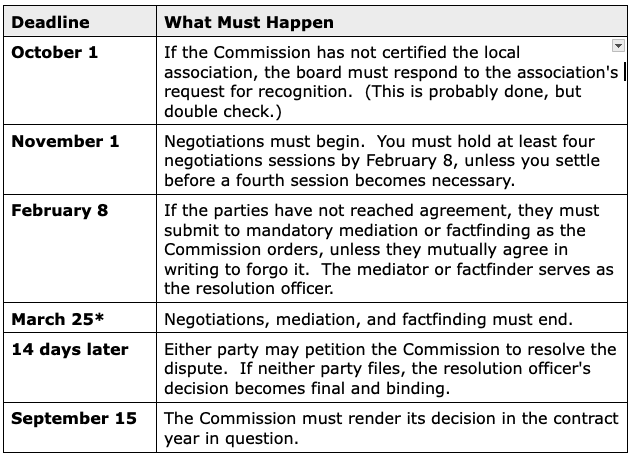
*On or before March 25 of the year preceding the contract year in question, or within twenty-five days after certification of the amounts to be distributed under the Tax Equity and Educational Opportunities Support Act pursuant to Neb. Rev. Stat. § 79-1022 for that contract year, whichever occurs last in time. This year, with a long legislative session, it might be the TEEOSA date that matters most.
Questions?
If you have questions, contact your district's legal counsel or email us at ksb@ksbschoollaw.com. Better yet, Shari Russell is THE person to talk comparability. Drop her a line at shari@ksbschoollaw.com or give her a call at 402-804-8000.