
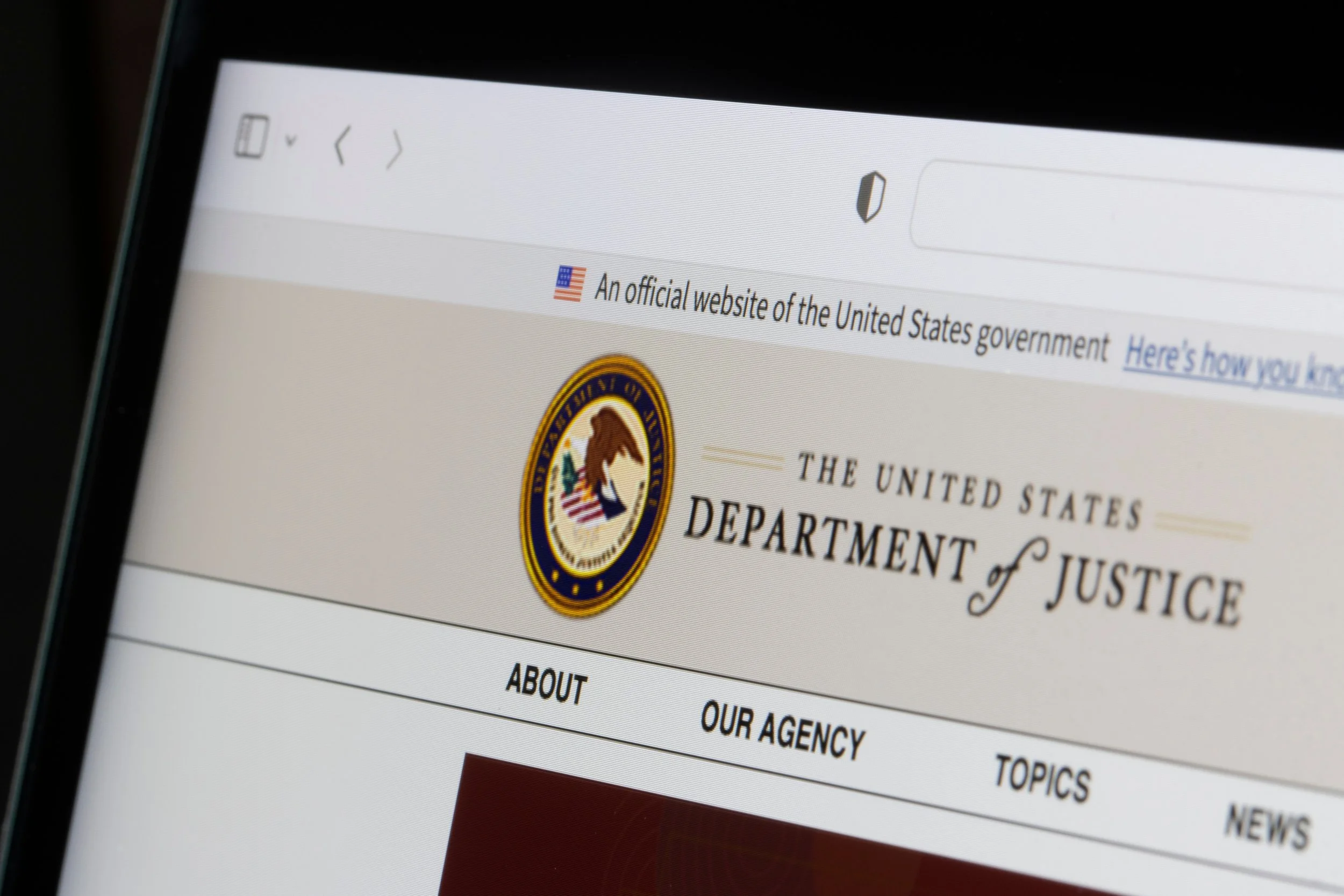
Your students’ special ed rights are now overseen by a health agency. Their complaints about privacy and civil rights now go directly to the Department of Justice. If this gives you pause, good. It should. On June 16 the US Department of Education signed four interagency agreements that moved OSERS to HHS and OCR plus the Student Privacy Office to DOJ. The administration has telegraphed that this was coming since 2025, but warned and ready aren’t the same thing. There's a lot of noise out there, so here's a clear-eyed picture of what's actually happening and what it means for your district.
The Agreements
ED signed four agreements: HHS absorbs special education and rehabilitative services (OSERS); DOJ takes on civil rights enforcement (OCR), student privacy protection (FERPA), and school desegregation advisory services. ED retains statutory authority and final decision-making under all four. Secretary Linda McMahon issued a letter the same day reassuring schools and families that IDEA’s education framework remains intact and “that OSERS and OCR will maintain their independent statutory functions without interruption.” That's the promise. Implementation is the question.
Civil Rights Enforcement Gets Sharper, Maybe
DOJ likely brings a stronger enforcement posture than OCR's traditional complaint-resolution model, and this shift shouldn't come as a surprise. A complaint moving through a DOJ-assisted investigation may simply feel different from one handled entirely within OCR's traditional framework. That's not cause for alarm, but it is a reason to take incoming complaints seriously and loop in counsel early, which is a good practice regardless. This shift didn't come without warning. Over the past year, headlines have focused primarily on OCR's significant staff reductions, so shifting its functions to an agency with stronger enforcement muscle is a logical next step to achieve the administration's desire to shrink the Department of Education. The administration launched a joint Title IX Special Investigations Team in 2025 combining OCR and DOJ staff to build enforcement-ready cases from day one. DOJ recently announced investigations into dozens of districts in California, Illinois, and Michigan over curriculum content and parental opt-out rights, a sign of the enforcement posture districts should expect going forward. Even if this move comes as no surprise, only time will tell how or whether districts feel its impact. Traditionally, the DOJ has more muscle but fewer complaint processors. How they staff this switch to handle thousands of potential complaints is worth monitoring.
On a practical note, if your district is currently in the middle of an OCR investigation, it will not reset. Stay engaged, meet every deadline and make sure your documentation clearly explains your district's decisions. If DOJ plays a more active role, the process may feel more formal and legalistic, which is all the more reason to involve your school lawyers in the process early or to get them involved now if you haven’t.
FERPA Oversight Expands
The student privacy agreement gets less press than the civil rights move, but it touches every district directly. DOJ now reviews FERPA complaints and investigates how districts handle student records, parental access to curriculum, and survey opt-outs. This administration has prioritized parental rights since Executive Order 14190 (January 2025), and Secretary McMahon signaled intent to clear the FERPA complaint backlog in March 2025. Districts won't feel this shift immediately, but it does signal that diligent FERPA training and compliance remain essential.
One open question worth watching: the agreement doesn’t make entirely clear who will be responsible for sending student privacy letters going forward. Unclear lines of authority have a way of meaning things fall through the cracks. Student Privacy Office complaint investigations have never been speedy and it feels likely that this problem will be exacerbated, at least in the short term.
Special Education Moves to HHS
This is the move that has generated the most concern and that concern isn’t unreasonable. OSERS, IDEA and OCR are all pieces of the same special educational puzzle. Splitting them across HHS and DOJ raises real questions about coordination and institutional knowledge going forward.
Advocacy groups have raised concerns about the OSERS-to-HHS move, arguing that HHS operates through a health and medical services framework, raising real questions about whether special education oversight belongs in an agency whose default orientation is clinical rather than educational. Secretary McMahon’s June 16 letter addressed this directly, stating that “IDEA ensures that a child’s disability isn’t viewed as a medical condition that needs to be treated.” That’s the right legal framing, but the question is whether that holds in practice. Under the partnership, HHS takes over day-to-day administrative functions, including grant administration, compliance monitoring, data collection, and fund drawdowns, while OSERS retains policy leadership, statutory authority, and technical assistance to states. FY2026 grants continue through ED's G5 system; future awards will move to HHS's GrantSolutions platform. At best, this will be a learning curve for a new system; at worst, grant management may become even more complex. More info on an upcoming training opportunity below.
Bottom Line
Your obligations under IDEA, Section 504, Title II, Title VI, and Title IX have not changed. Students retain their rights, and federal oversight continues, just under a new organizational structure. The questions around implementation are real and worth watching, but we’re tracking the details closely. We’ll keep you updated as guidance develops. Stay focused on compliance, document what you’re doing and loop in legal when you have questions arise. As always, you can reach us at ksb@ksbschoollaw.com.
One More Thing While We Have You
All of this federal grant reshuffling comes at a moment when grant compliance (boring things like EDGAR, Uniform Guidance, procurement, obligation deadlines) is under more scrutiny than it's been in years. The cost of getting it wrong has gone from "uncomfortable audit finding” to “very bad news very fast.” We have something coming in October that’s directly relevant and we think you’ll be glad we got it on the books when we did. More details to come soon…..